The Painted Reptile
Woma Python – Quick Care OverviewWoma Python Care Sheet – Full DetailsThe Painted Reptile · Reptile supplies, care & advice
18730 Oxnard St., Unit 215, Tarzana, CA 91356
818-654-9441 · paintedreptile.com
Painted Reptile Care Sheet

Woma Python

Aspidites ramsayi(Macleay, 1882)

Also called: Woma, Ramsay’s python

Group Snake · PythonFamily PythonidaeWild status Least Concern (IUCN)
Last reviewed November 2026
Photo coming soon

Quick facts

PR Keeper Level · care difficulty
4/10Beginner
1 · Hardy & forgiving10 · Experts only
1–2 Very easy · 3–4 Beginner · 5–6 Intermediate · 7–8 Advanced · 9–10 Expert
PR Handler Level · temperament
Yellow – Squirmy or flighty
Generally calm, but a strong feeding response — use a hook at feeding time
Green: Calm & easygoing Yellow: Squirmy or flighty Red: Known to be aggressive
Adult size
Typically 5–6½ ft (1.5–2 m)
Lifespan
20+ yrs
Temperature
Warm end about 90–95°F
Cool end mid-70s to low 80s · sources differ slightly
Humidity
50–70%
Not a rain-forest python · avoid chronic damp
Diet
Carnivore
Frozen/thawed rodents (hook and tongs)
Enclosure
4×2×2 ft minimum (adult)
Floor space and a hide matter more than height
Active
Mostly nocturnal and fossorial; often hidden by day
Temperament
Usually calm; a very eager feeder

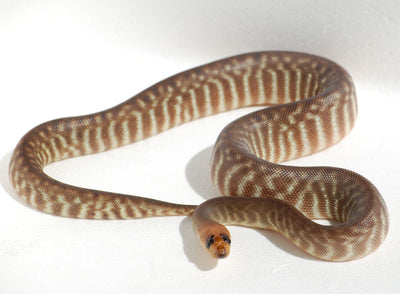
An Australian burrowing python with no heat pits, a narrow head, and a banded body. Captive-bred womas are usually calm and hardy, but they are enthusiastic feeders — use a hook, do not overfeed, and give an adult a 4×2 ft floor, not a long-term 20-gallon tank.

Key care at a glance

  • HousingA 4×2×2 ft enclosure or larger for one adult (Nick’s AOT). Hides at both ends and a substrate they can push through. One snake. A 40-gallon tank (used in an older Reptiles Magazine article) is tight by current standards and is not the recommendation here.
  • Heat & lightA clear gradient. Nick’s: warm end about 91–95°F (33–35°C), cool end 75–79°F (24–26°C), on a thermostat, ceramic or infrared heat is fine. Reptiles Magazine used a milder 79–85°F enclosure with a 90°F hotspot, often from a heat pad. This draft uses the warmer Nick’s gradient as the primary target and flags the disagreement. UVB is not required; a low Zoo Med 5.0 can be offered.
  • HumidityAbout 50–70% (Reptiles Magazine). Higher than that risks scale rot. A water bowl, cleaned often; some keepers offer soaking water on a schedule rather than leaving a huge bowl always in a damp corner.
  • DietFrozen/thawed rodents, every 7–14 days for adults, less often if the snake is heavy. They rarely refuse, so obesity is the usual problem. Use a hook and tongs — the feeding response can be sharp.
  • HandlingUsually calm once you have moved them out of feeding mode.

Quick setup checklist

  • 4×2×2 ft or larger for one adult, with a hide at each end
  • Thermostatically controlled warm end (about 90–95°F) and a cooler end
  • Humidity around 50–70%, never chronically wet
  • Clean water bowl
  • Frozen/thawed rodents on a lean schedule; hook and tongs
  • Captive-bred paperwork (CITES II python)
Want every detail? Natural history, breeding, health and more are in the full care sheet. Open full details

Supporting Sources: Reptile Database — Aspidites ramsayi · Reptiles Magazine — Woma Python Care and Breeding · Nick’s AOT — Woma python care guide · Species+ — CITES II · IUCN / GBIF — Least Concern · 14 CCR §671 · Existing site python sheets · full list in Full details · full list on the full care sheet

The Painted Reptile · 18730 Oxnard St., Unit 215, Tarzana, CA 91356 · 818-654-9441 This care sheet is a general guide. Every animal is an individual, so watch yours closely and see a reptile veterinarian with any health concerns.
1

About the species

Species background & natural history

Described as Aspidiotes ramsayi by Macleay in 1882; now Aspidites ramsayi. It and the black-headed python (A. melanocephalus) are the two species in Aspidites, a genus of pythons that lack the facial heat pits of most other pythons — a match for a life spent hunting in burrows, including a wild diet that often includes other reptiles (Reptiles Magazine).

The Reptile Database does not accept poorly diagnosed Hoser subspecies. The store lists the animal as ‘Woma.’

Physical description

A stout, ground-dwelling python with a comparatively narrow, rounded head, no heat pits, and a body patterned in pale brown to orange bands or blotches. Nick’s AOT: typically about 1.5–2 m (5–6½ ft).

Reptiles Magazine notes they can reach about 4 ft in the first year, though a smaller first-year size is more typical. Distinguished from the black-headed python by the lack of a dark hood (Smith 1981, cited by the Reptile Database).

Distribution

Central and arid Australia: New South Wales, Northern Territory, Queensland, South Australia, Victoria, and Western Australia (Reptile Database). Type locality: Fort Bourke, New South Wales.

A fossorial and ground-hunting snake of sandy and scrubby country.

Lifespan

Nick’s AOT: 20 years or more with good care. Plan for a long-term animal.

2

Housing

Caging

  • Nick’s AOT: a thermostatically controlled enclosure around 4×2 ft for an adult, larger better.
  • This draft uses 4×2×2 ft as the minimum: so overhead heat and a water bowl fit safely.
  • Reptiles Magazine described adults in 40-gallon glass tanks with a heat pad, hide, rocks, and carpet: that is a compact, older style and is noted as a disagreement, not the target.
  • Provide a hide at each end.
  • One snake.
  • A locking lid or a proper PVC/wooden vivarium.

Cage decor & substrate

  • Hides on the warm and cool ends (Reptiles: Magazine stresses a hide as non-negotiable).
  • A substrate they can move through: not dusty, not soaking.
  • A sturdy water bowl.
  • Light décor they can push past: any heavy rock must sit on the floor.
  • They are not an arboreal python: floor space and burrow-like hides matter more than branches, though a low climb is fine.
3

Heat, light & humidity

Temperature needs

  • Primary target (Nick’s AOT): warm end 91–95°F (33–35°C), cool end 75–79°F (24–26°C), thermostat-controlled.
  • Reptiles Magazine: 79–85°F enclosure temperatures with a 90°F hotspot, often from an under-tank pad, and no lamp required.
  • This is a real disagreement.
  • The draft prefers a measured overhead or ceramic: gradient on a thermostat (safer than an unregulated heat pad under a burrowing snake) and the Nick’s figures, which sit close to other mid-sized python setups.
  • If a keeper already uses the milder Magazine: range and the snake is feeding and shedding well, that is documented too.
  • Always measure both ends.

Heating & lighting

  • A thermostat is required.
  • Linked options: a Zoo Med basking bulb for a daytime warm end, and/or an Exo Terra ceramic bulb for heat without light (especially at night in a cold room).
  • Nick’s notes UVB is not essential but a low 5.0 can help: Zoo Med 5.0 is linked.
  • A regular day/night cycle.
  • Do not use a heat rock.
  • If a heat pad is used at all: it must be on a thermostat and must not be the only uncontrolled heat under a snake that likes to bury.

Humidity & water

  • Reptiles Magazine aims for 50–70% and warns that: much higher humidity can cause blisters and scale rot.
  • They left a water bowl in overnight once: a week rather than a permanent large soak in a damp cage.
  • A clean bowl should still be available to drink.
  • Do not run this species like a green: tree python or rainbow boa.
4

Feeding & supplements

Diet & feeding

  • Captive staple: appropriately sized frozen/thawed rodents (Nick’s: juveniles weekly, adults every 7–14 days).
  • They are famous as eager feeders (Reptiles Magazine): and become obese if that appetite is indulged.
  • Wild prey includes rodents, birds, and a lot of other reptiles (including monitors and snakes): some stubborn feeders have been started on lizard-scented rodents.
  • Do not offer live dangerous prey, and do: not keep other reptiles in the same enclosure.
  • Use a hook to move the snake and tongs to offer food.

Supplements

Whole rodent prey is complete.

5

Breeding & handling

Breeding

Oviparous. Reptiles Magazine: can breed as early as two years; a modest night-time cool-down is used; incubation about 86–89°F, preferably a steady 88°F, for 60–75 days, in a damp but not wet medium (they note some breeders avoid free water around the eggs).

This sheet is not a breeding manual.

Handling your new pet

  • Usually calm once you have taken feeding off the table.
  • Use a hook to lift the snake out: of the enclosure around mealtime so a feeding strike is not aimed at a hand.
  • Support the body: they are heavier than a children’s python.
6

Health & setup

Common health issues

  • Obesity is the routine problem.
  • Also watch sheds, scale condition (humidity too high: or a dirty wet box), and regurgitation from handling too soon after a meal.
  • New snakes should be quarantined.
  • A reptile veterinarian for appetite or respiratory signs.

Quick setup checklist

  • 4×2×2 ft or larger for one adult, with a hide at each end
  • Thermostatically controlled warm end (about 90–95°F) and a cooler end
  • Humidity around 50–70%, never chronically wet
  • Clean water bowl
  • Frozen/thawed rodents on a lean schedule; hook and tongs
  • Captive-bred paperwork (CITES II python)

Shop the setup

Supporting Sources

The Painted Reptile · 18730 Oxnard St., Unit 215, Tarzana, CA 91356 · 818-654-9441 This care sheet is a general guide. Every animal is an individual, so watch yours closely and see a reptile veterinarian with any health concerns.
Just added to your wishlist:
My Wishlist
You've just added this product to the cart:
Go to cart page