The Painted Reptile
Madagascar Ground Gecko – Quick Care OverviewMadagascar Ground Gecko Care Sheet – Full DetailsThe Painted Reptile · Reptile supplies, care & advice
18730 Oxnard St., Unit 215, Tarzana, CA 91356
818-654-9441 · paintedreptile.com
Painted Reptile Care Sheet

Madagascar Ground Gecko

Paroedura picta(Peters, 1854)

Also called: Panther gecko, pictus gecko, ocelot gecko, Madagascar ground gecko

Group Lizard · GeckoFamily GekkonidaeWild status Least Concern (IUCN)
Last reviewed November 2026
Photo coming soon

Quick facts

PR Keeper Level · care difficulty
2/10Very easy
1 · Hardy & forgiving10 · Experts only
1–2 Very easy · 3–4 Beginner · 5–6 Intermediate · 7–8 Advanced · 9–10 Expert
PR Handler Level · temperament
Yellow – Squirmy or flighty
Fast and easily stressed; not a handling pet — never grab the tail
Green: Calm & easygoing Yellow: Squirmy or flighty Red: Known to be aggressive
Adult size
About 5½ in. total
Lifespan
6–10 years
Temperature
Warm hide 86–90°F
Daytime air 75–82°F · night 68–73°F
Humidity
50–70%
Mist daily · keep a humid hide; let the surface dry
Diet
Insectivore
Gut-loaded live insects, dusted
Enclosure
24×18×18 in. min. (one adult)
Floor space matters · one gecko is simplest
Active
Nocturnal to crepuscular
Temperament
Alert, fast, better watched than held

A small, ground-dwelling Madagascar gecko sold here as the Panther Gecko. It tames less readily than a leopard gecko and is at its best as a display animal, but the daily care is straightforward: a warm hide, a humid hide, and a gut-loaded insect diet.

Key care at a glance

  • HousingAt least 24×18×18 in. (about 60×45×45 cm) for one adult, with a secure, escape-proof lid. Floor space matters more than height. One gecko per enclosure is the simplest pet setup; keep adult males apart.
  • Heat & lightA warm hide around 86–90°F (30–32°C), daytime air about 75–82°F, and a night drop to the high 60s or low 70s. Low-to-moderate UVB is optional if the diet is well supplemented; if you offer UVB, give shade so the gecko can get out of it.
  • HumidityMist daily so humidity briefly hits about 60–70%, then let the surface dry. Keep a humid hide with damp moss for shedding. They often drink droplets more readily than from a bowl, though a shallow dish is still a good backup.
  • DietInsectivore. Gut-loaded crickets or roaches of appropriate size (about the width of the head), dusted with calcium. A multivitamin on a lighter schedule.
  • HandlingKeep it brief and low, or skip it. Never grab the tail.

Quick setup checklist

  • Escape-proof enclosure at least 24×18×18 in. for one adult
  • Warm hide, cool hide, and a humid hide with damp moss
  • Thermostat-controlled heat and a way to measure hide temperature
  • Optional low UVB with a shaded retreat, or a solid calcium-with-D3 plan if no UVB
  • Gut-loaded, dusted insects of the right size; no loose crickets overnight
  • Shallow water dish plus daily misting
  • One gecko per pet enclosure; males housed alone
Want every detail? Natural history, breeding, health and more are in the full care sheet. Open full details

Supporting Sources: Reptile Database — Paroedura picta · Reptiles Magazine — Madagascar Ground Gecko care · Herpeton Academy — Madagascar Ground Gecko care · IUCN / GBIF — Least Concern · Species+ · 14 CCR §671 · full list in Full details · full list on the full care sheet

The Painted Reptile · 18730 Oxnard St., Unit 215, Tarzana, CA 91356 · 818-654-9441 This care sheet is a general guide. Every animal is an individual, so watch yours closely and see a reptile veterinarian with any health concerns.
1

About the species

Species background & natural history

Paroedura picta was named for science by Wilhelm Peters in 1854 (as Diplodactylus pictus). It is a true gecko (family Gekkonidae), not an eyelid gecko, but it is a ground-dweller with slender toes rather than the sticky toe pads of a climbing house gecko.

The Reptile Database notes a 2024 report of parthenogenesis in this species (Sokhnenko et al.) — a research finding, not a reason to expect all females to reproduce alone. The store lists this animal as ‘Panther Gecko.’

Physical description

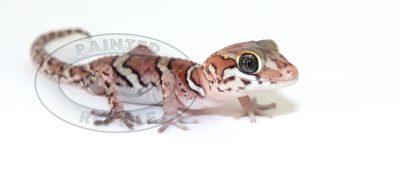
A slender, terrestrial gecko usually about 5½ inches (14 cm) long including the tail, with a relatively large head, banded or spotted pattern (especially bold in juveniles), and a tail that can be dropped and later regrown. Adults often look more muted than the bright ‘ocelot’ or ‘pictus’ juveniles.

Females are a little slimmer; males should be housed alone.

Distribution

Western and southern Madagascar. The type locality is St.

Augustin’s Bay (Reptile Database). It lives in dry, open, and leaf-littered habitats rather than rainforest canopy.

Lifespan

Reptiles Magazine gives 6–10 years with proper care. That is shorter than a typical leopard gecko; plan accordingly, and do not advertise a 15–20 year life without a source that supports it.

2

Housing

Caging

  • A practical minimum for one adult is 24×18×18 in. (60×45×45 cm): Herpeton Academy uses this footprint and suggests 75×45×45 cm for a compatible pair.
  • Reptiles Magazine mentions a 10-gallon tank for a male and two females: that is smaller than current good practice and is not the recommendation here.
  • Use a secure screen or front-opening lid: these geckos are small and escape easily.
  • One gecko per enclosure is the simplest pet setup.
  • Keep males separately.
  • If you ever house a pair, have a second: enclosure ready and watch the female’s condition.

Cage decor & substrate

  • Give at least a warm hide, a cool: hide, and a humid hide with damp sphagnum or coco fiber.
  • Add leaf litter, cork flats, and light décor they can duck under.
  • Keep heavier rocks supported on the floor, not: just on loose substrate, so a digging gecko is not crushed.
  • A shallow water dish on the cool side.
3

Heat, light & humidity

Temperature needs

  • Herpeton Academy targets about 75–82°F (24–28°C) by day: a 86–90°F (30–32°C) warm hide, and 68–73°F (20–23°C) at night.
  • Measure the hide surface with a digital probe: or infrared thermometer and keep heat on a thermostat or dimmer.

Heating & lighting

  • Overhead heat (a Zoo Med basking bulb in a ceramic-socket: dome, controlled by a thermostat) is a clean way to create the warm hide.
  • UVB is optional if the insect diet is properly supplemented (Reptiles Magazine).
  • Herpeton Academy prefers low-to-moderate UVB with access to shade.
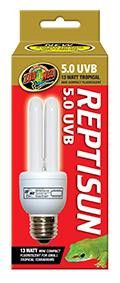
  • If you offer UVB, a Zoo Med ReptiSun: 5.0 in a proper fixture, covering part of the enclosure only, is the store-linked option.
  • Do not bake the whole tank.

Humidity & water

  • Mist the sides daily so humidity rises into: the 60–70% range (Reptiles Magazine) and then falls as the surface dries.
  • Keep a humid hide so sheds come off cleanly.
  • A small water dish is a backup: many of these geckos drink droplets.
4

Feeding & supplements

Diet & feeding

  • Exclusively insectivorous.
  • Gut-loaded crickets as a staple, with roaches and occasional: larvae (mealworms, etc.) as variety.
  • Reptiles Magazine: prey about 90–95% of head size; an adult often takes a ¾-inch cricket.
  • Do not leave uneaten crickets in overnight: they can nip a resting gecko.
  • Feed from a dish or a clean hard: surface so the gecko does not swallow substrate.

Supplements

  • Dust insects with a calcium powder.
  • If you are not using UVB, a calcium with D3 is the usual choice: if you are using UVB, rotate a calcium without D3 and use a multivitamin more sparingly (Zoo Med Repti Calcium and Reptivite are linked).
  • Breeding females need consistent calcium, not heavier and heavier doses.
5

Breeding & handling

Breeding

Oviparous. Males and females should not be left together indefinitely — repeated laying drains the female.

The Reptile Database records a 2024 paper on parthenogenesis; that does not change normal captive breeding advice. This sheet is not a breeding manual.

Handling your new pet

  • A display gecko.
  • Handle only when needed, low over a surface: and never by the tail.
  • Wash hands before and after.
6

Health & setup

Common health issues

  • Watch for dehydration, stuck shed (especially toes and tail: tip), weight loss, and injuries from falls or rough handling.
  • New or thin imports should be checked by a reptile: veterinarian, including a fecal exam.
  • Calcium imbalance shows up as weakness or soft: jaws if diet and UVB/D3 are wrong.

Quick setup checklist

  • Escape-proof enclosure at least 24×18×18 in. for one adult
  • Warm hide, cool hide, and a humid hide with damp moss
  • Thermostat-controlled heat and a way to measure hide temperature
  • Optional low UVB with a shaded retreat, or a solid calcium-with-D3 plan if no UVB
  • Gut-loaded, dusted insects of the right size; no loose crickets overnight
  • Shallow water dish plus daily misting
  • One gecko per pet enclosure; males housed alone

Shop the setup

Supporting Sources

The Painted Reptile · 18730 Oxnard St., Unit 215, Tarzana, CA 91356 · 818-654-9441 This care sheet is a general guide. Every animal is an individual, so watch yours closely and see a reptile veterinarian with any health concerns.
Just added to your wishlist:
My Wishlist
You've just added this product to the cart:
Go to cart page