The Painted Reptile
Desert Hairy Scorpion – Quick Care OverviewDesert Hairy Scorpion Care Sheet – Full DetailsThe Painted Reptile · Reptile supplies, care & advice
18730 Oxnard St., Unit 215, Tarzana, CA 91356
818-654-9441 · paintedreptile.com
Painted Reptile Care Sheet

Desert Hairy Scorpion

Hadrurus arizonensisEwing, 1928

Also called: Giant desert hairy scorpion, Arizona desert hairy scorpion

Group Invertebrate · ScorpionFamily HadruridaeWild status Not Evaluated (IUCN) · Not CITES-listed
Last reviewed November 2026
Photo coming soon

Quick facts

PR Keeper Level · care difficulty
2/10Very easy
1 · Hardy & forgiving10 · Experts only
1–2 Very easy · 3–4 Beginner · 5–6 Intermediate · 7–8 Advanced · 9–10 Expert
PR Handler Level · temperament
Red – Known to be aggressive
Do not handle – painful sting and strong pincers; move with a cup and soft brush
Green: Calm & easygoing Yellow: Squirmy or flighty Red: Known to be aggressive
Adult size
About 4–6 in.
Lifespan
Up to 15–20 yrs (females)
Temperature
75–80°F
Room temperature to warm
Humidity
Dry
Slightly damp bottom layer only
Diet
Carnivore (insects)
Crickets, roaches
Enclosure
2.5–5 gal (adult)
Longer than tall, secure lid
Active
Night (nocturnal) · burrower
Temperament
Defensive, active

The largest scorpion in North America, native to the Sonoran and Mojave deserts. Desert hairy scorpions are hardy, bold eaters and long-lived, but they are defensive display animals – their venom is mild, yet the sting hurts and they should never be handled. They need a dry, ventilated tank with substrate deep enough to dig.

Key care at a glance

  • EnclosureA secure 2.5–5 gallon tank for one adult, longer and wider than tall, with a locking lid.
  • SubstrateSeveral inches of packed sand-and-coconut-fiber or clay mix that holds a burrow.
  • MoistureKeep it dry; dampen only the bottom layer occasionally – excess damp causes fungus.
  • HeatAbout 75–80°F; if using a heat mat, put it on the side of a glass tank.
  • WaterA shallow water dish, refreshed often.
  • FoodAdults 1–2 crickets or roaches about every other week; young weekly.
  • HandlingDon’t – move it with a cup and a soft brush, one scorpion per tank.

Quick setup checklist

  • 2.5–5 gal tank with secure lid
  • Sand–coco or clay burrowing substrate
  • Cork bark or flat stone hide
  • Shallow water dish
  • Side-mounted heat mat (glass tanks)
  • Thermometer
  • Crickets or roaches
  • Catch cup + soft brush
Want every detail? Natural history, breeding, health and more are in the full care sheet. Open full details

Supporting Sources: Exotic Pet Vet · University of Arizona Cooperative Extension · Oregon Zoo · Los Angeles Zoo · USDA APHIS · IUCN status · full list in Full details · full list on the full care sheet

The Painted Reptile · 18730 Oxnard St., Unit 215, Tarzana, CA 91356 · 818-654-9441 This care sheet is a general guide. Every animal is an individual, so watch yours closely and see a reptile veterinarian with any health concerns.
1

About the species

Species background & natural history

Described by Ewing in 1928. Hadrurus is now placed in the family Hadruridae. Its common name comes from the brown sensory hairs that pick up vibrations from prey and predators (Los Angeles Zoo; Oregon Zoo).

The University of Arizona calls it the largest scorpion in the U.S.; only the Arizona bark scorpion is of medical concern there.

Wild status: Not Evaluated by the IUCN (GBIF; the LA Zoo lists Data Deficient); not CITES-listed.

Physical description

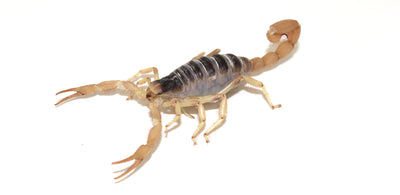
A big, heavy-bodied, pale-yellow scorpion, often with a darker back, and covered in fine brown hairs (University of Arizona; LA Zoo).

  • Size: usually over 5 in. (University of Arizona); Oregon Zoo gives 4–7 in. and the LA Zoo up to 5.5 in.
  • Sexes: females are bulkier; males have larger pincers (LA Zoo).
  • Venom: mild and not medically significant for most people, but stings are painful (Exotic Pet Vet; University of Arizona).

Distribution

Sonoran and Mojave deserts of Arizona, California, Nevada and Utah, and northern Mexico including Baja California (University of Arizona; LA Zoo). They are nocturnal and spend the day in burrows, under rocks or in rodent holes (LA Zoo; Oregon Zoo). Wild prey includes insects, lizards and other scorpions (Oregon Zoo).

Lifespan

Wild animals live about 7–10 years; in human care they can reach 15–20 years (LA Zoo; Oregon Zoo). Exotic Pet Vet notes females may live up to 20 years and males about 10.

2

Housing

Caging

  • Size: a 2.5–5 gallon tank for one adult; small containers for young, about four times the scorpion’s length (Exotic Pet Vet).
  • Shape: longer and wider than tall – this is a ground-dwelling burrower (Exotic Pet Vet).
  • Lid: a secure, ventilated lid; scorpions escape through small gaps.
  • Housing: one per enclosure – Oregon Zoo notes they eat smaller scorpions.

Cage decor & substrate

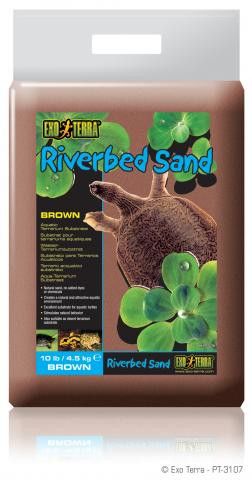
  • Substrate: a 50:50 coconut fiber and sand mix, or a clay burrowing substrate, deep enough to hold a burrow (Exotic Pet Vet).
  • Hides: a flat piece of cork bark or a stone to burrow under.
  • Avoid: anything that keeps the enclosure wet or stuffy.
3

Heat, light & humidity

Temperature needs

  • Range: 75–80°F (Exotic Pet Vet).
  • Heat: if extra heat is needed, use a heat mat on the side of a glass enclosure – not under or on acrylic or plastic (Exotic Pet Vet).

Heating & lighting

  • Light: no special lighting needed; they are nocturnal.
  • Viewing: scorpions glow under ultraviolet (black) light (University of Arizona), so a UV night light lets you watch them.

Humidity & water

  • Dry: an arid species – too much moisture causes fungal infections (Exotic Pet Vet).
  • Damp layer: pour a little water down one side every couple of weeks to keep the bottom layer slightly damp, away from the scorpion (Exotic Pet Vet).
  • Water: a shallow water dish, changed often (Exotic Pet Vet).
4

Feeding & supplements

Diet & feeding

  • Food: crickets or roaches no longer than about a quarter of the scorpion’s body (Exotic Pet Vet).
  • Young: 1–2 small crickets or roach nymphs a week, less as the abdomen fills out (Exotic Pet Vet).
  • Adults: 1–2 medium-large crickets or medium dubia roaches about every other week (Exotic Pet Vet).
  • Tip: crush the heads of dubia roaches so they can’t burrow away; remove uneaten prey.

Supplements

  • Supplements: not needed; feed varied, well-fed feeder insects.
5

Breeding & handling

Breeding

  • Young: females give birth to about 25–35 live young that ride on her back until their first molt (Exotic Pet Vet; Oregon Zoo).
  • Mating: mating involves a ‘dance’ with locked pincers; females sometimes eat males (LA Zoo; Oregon Zoo).
  • Maturity: after 5–6 molts over several years (Exotic Pet Vet).

Handling your new pet

  • Don’t: never handle – they pinch and sting, and falls injure them (Exotic Pet Vet).
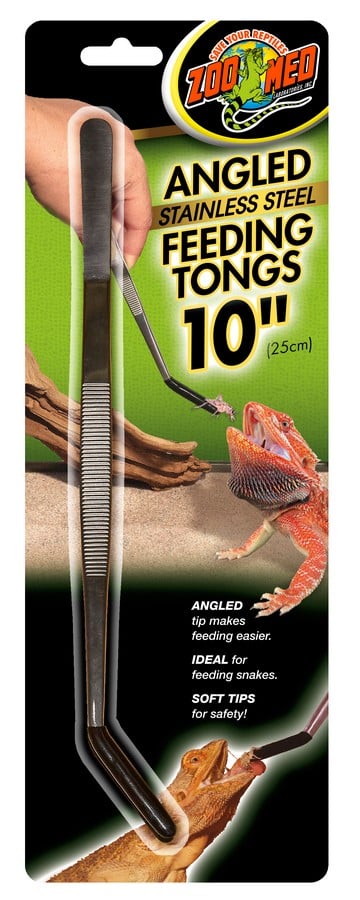
  • Moving: place a cup in front of it and nudge the tail gently with a soft paint brush (Exotic Pet Vet).
  • Safety: stings are painful and allergic reactions are possible – keep away from children and pets.
6

Health & setup

Common health issues

  • Fungus: from damp, stuffy conditions (Exotic Pet Vet).
  • Leftover prey: remove uneaten insects so they don’t disturb the scorpion.
  • Falls: injuries from falls – keep the tank low and don’t handle (Exotic Pet Vet).

Quick setup checklist

  • 2.5–5 gal tank with secure lid
  • Sand–coco or clay burrowing substrate
  • Cork bark or flat stone hide
  • Shallow water dish
  • Side-mounted heat mat (glass tanks)
  • Thermometer
  • Crickets or roaches
  • Catch cup + soft brush

Shop the setup

Supporting Sources

  • Exotic Pet Vet (Jenifer L. Nix, BVSc) – Desert hairy scorpion care (range, size, lifespan, handling, enclosure, temperature, substrate, moisture, feeding): exoticpetvet.com
  • University of Arizona Cooperative Extension – Scorpions of the desert southwest United States (AZ1768): extension.arizona.edu
  • Oregon Zoo – Desert hairy scorpion (size, lifespan, behavior, reproduction, diet): oregonzoo.org
  • Los Angeles Zoo – Desert hairy scorpion (habitat, size, sexes, lifespan, mating): lazoo.org
  • USDA APHIS – Invertebrate pets; Oregon Dept. of Agriculture approved invertebrate list
  • IUCN status via GBIF (Not Evaluated); CITES: not listed (Species+)
The Painted Reptile · 18730 Oxnard St., Unit 215, Tarzana, CA 91356 · 818-654-9441 This care sheet is a general guide. Every animal is an individual, so watch yours closely and see a reptile veterinarian with any health concerns.
Just added to your wishlist:
My Wishlist
You've just added this product to the cart:
Go to cart page