The Painted Reptile
Armadillo Lizard – Quick Care OverviewArmadillo Lizard Care Sheet – Full DetailsThe Painted Reptile · Reptile supplies, care & advice
18730 Oxnard St., Unit 215, Tarzana, CA 91356
818-654-9441 · paintedreptile.com
Painted Reptile Care Sheet

Armadillo Lizard

Ouroborus cataphractus(Boie, 1828)

Also called: Armadillo girdled lizard, golden armadillo lizard

Group Lizard · Girdled lizardFamily CordylidaeWild status Near Threatened (IUCN)
Last reviewed November 2026
Photo coming soon

Quick facts

PR Keeper Level · care difficulty
5/10Intermediate
1 · Hardy & forgiving10 · Experts only
1–2 Very easy · 3–4 Beginner · 5–6 Intermediate · 7–8 Advanced · 9–10 Expert
PR Handler Level · temperament
Yellow – Squirmy or flighty
A display lizard that may bite if forced; let it hide rather than handle it
Green: Calm & easygoing Yellow: Squirmy or flighty Red: Known to be aggressive
Adult size
About 6–9 in. total (16–23 cm)
Lifespan
20–25+ yrs
Temperature
Basking surface 95–105°F
Daytime air ~79–82°F · cool crevice mid-70s · night 65–75°F
Humidity
40–60%
Not a bone-dry uro setup · humid crevice for shedding
Diet
Insectivore (some keepers offer plants)
Varied gut-loaded insects; plant matter is debated
Enclosure
4×2×2 ft min. (one or a proven pair)
Stable rock crevices, not a loose rock pile
Active
Diurnal, often in the morning then hidden
Temperament
Shy, crevice-loving, better displayed than held

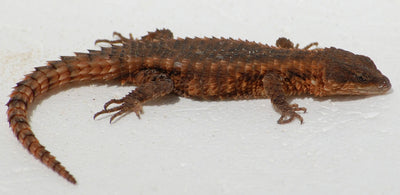
A small, heavily armored South African girdled lizard, once called Cordylus cataphractus, that curls into a ball and bites its own tail when threatened. It is a display animal with a special rock-crevice home, not a handling pet. Buy captive-bred only — the species is CITES II and IUCN Near Threatened.

Key care at a glance

  • HousingAt least 4×2×2 ft (120×60×60 cm) for one adult or a proven compatible pair (Herpeton Academy). Build stable, inspectable rock crevices — never a loose pile that can collapse. One animal is the simplest pet setup.
  • Heat & lightDaytime air about 79–82°F, basking surface 95–105°F, a cooler crevice in the mid-70s, and a night drop. Strong linear T5 UVB (Zoo Med 10.0) over the basking end, with deep shade in the crevices. These lizards do not want an all-over hot box.
  • HumidityAbout 40–60% (Herpeton Academy; The Exotics Keeper article uses 50–60% with light morning and evening spray). A slightly damper crevice helps sheds. Shallow, stable water dish.
  • DietVaried gut-loaded insects (crickets, roaches, and other appropriate invertebrates). Whether they should also get plants is debated (see disagreements).
  • HandlingDon’t. Let the lizard use its crevice. If you must move it, be ready for a bite and for the tail-in-mouth defense.

Quick setup checklist

  • 4×2×2 ft or larger with stable, inspectable rock crevices
  • Basking 95–105°F in one corner, cooler crevices, measured heat
  • Linear Zoo Med 10.0 UVB and a shaded retreat
  • Ambient humidity about 40–60% and a shallow water dish
  • Varied gut-loaded insects as the staple diet
  • One animal, or a proven pair only, with a spare enclosure ready
  • Captive-bred paperwork (CITES II; IUCN Near Threatened)
Want every detail? Natural history, breeding, health and more are in the full care sheet. Open full details

Supporting Sources: Reptile Database — Ouroborus cataphractus · Exotics Keeper Magazine — Captive breeding and husbandry of the armadillo girdled lizard · Herpeton Academy — Ouroborus cataphractus care · Species+ — CITES II since 6 June 1981 · IUCN / GBIF — Near Threatened · 14 CCR §671 · full list in Full details · full list on the full care sheet

The Painted Reptile · 18730 Oxnard St., Unit 215, Tarzana, CA 91356 · 818-654-9441 This care sheet is a general guide. Every animal is an individual, so watch yours closely and see a reptile veterinarian with any health concerns.
1

About the species

Species background & natural history

Described as Cordylus cataphractus by Boie in 1828; moved to the genus Ouroborus by Stanley et al. in 2011. It is the type species of Ouroborus.

The genus name refers to the ouroboros — a dragon swallowing its tail — which is exactly the defensive posture. Live-bearing (ovoviviparous), not an egg-layer.

The store product is titled Armadillo Lizard.

Physical description

A flattened, spiny, armor-plated lizard. Herpeton Academy: adults about 16–23 cm (6–9 in.) total.

When alarmed it curves into a circle and grips the tail in its mouth, presenting a ring of spines. Color is typically tan to straw or golden-brown.

Sexing is easier once adult (about two years); males can be confirmed by hemipenal eversion, which is a job for an experienced keeper or vet, not a casual pet owner.

Distribution

Southwestern Republic of South Africa (Reptile Database). Type locality unknown; Boie was unsure even of the continent.

A rock-crevice specialist in dry, scrubby country, historically tied to harvester termites as a main wild food (Exotics Keeper Magazine).

Lifespan

Herpeton Academy: 20–25 years or more. Plan for a long-lived display animal.

2

Housing

Caging

  • Herpeton Academy practical minimum: 120×60×60 cm (4×2×2 ft) for one animal or a proven compatible pair.
  • A group needs more floor, more crevices than: animals, and duplicate basking and feeding spots, plus a spare enclosure before any grouping change.
  • Exotics Keeper Magazine (quoting Shane Albrecht) describes a 5×2×2: ft planted rock setup.
  • Front-opening helps you service crevices without tearing the scape down.
  • Secure lid.

Cage decor & substrate

  • The enclosure is the crevices.
  • Use bonded or otherwise fixed stone, slate, or artificial: rock so every gap is stable and can be inspected.
  • A firm soil/sand/clay or packed clay base (The: Exotics Keeper article uses 2–3 cm of packed clay) with only small diggable pockets.
  • No loose rock piles, no deep open water: no heat rocks, no crevice you cannot check.
  • Shallow, stable water dish that a small or newborn: lizard can leave easily, kept clear of trapping rocks.
3

Heat, light & humidity

Temperature needs

  • Exotics Keeper: daytime 79–82°F (26–28°C), basking point about 95–100°F (35–38°C), night 72–75°F (22–24°C).
  • They note the species does not like too much heat: put the basking lamp in one corner.
  • Shane Albrecht reports a basking area around 105°F (40.5°C).
  • Herpeton Academy: air 26–28°C, basking rock 35–38°C, cool crevice 22–25°C, night 18–24°C, with a preferred body temperature near 29.8°C in lab work.
  • This draft uses a basking surface of 95–105°F: daytime air around 79–82°F, a cooler crevice, and a night drop.
  • Measure and use a dimmer or thermostat.
  • Do not turn the whole cage into a 100°F box.

Heating & lighting

  • Diurnal.
  • Strong visible light and a linear T5 UVB over the basking end (Herpeton Academy: Ferguson Zone 3, with a bright basking area and deep shade a few centimetres away).
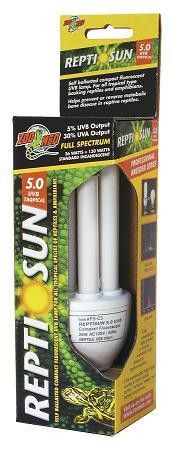
  • Link Zoo Med ReptiSun 10.0 T5 HO in a hood: plus a Zoo Med basking bulb on a dimmer.
  • Shane Albrecht has used a 4 ft 14% UVB with 40 W halogens: the store link is the Zoo Med 10.0 and basking bulb.
  • Provide shade in the crevices so the lizard: can turn the UV off.

Humidity & water

  • Ambient about 40–60%, with a slightly more humid: crevice at shed time (Herpeton Academy).
  • The Exotics Keeper article keeps 50–60% with two light sprays a day.
  • This is not a 20% uro cage.
  • Always offer a very shallow, stable water dish.
4

Feeding & supplements

Diet & feeding

  • In the wild, a wide range of arthropods, with southern harvester termites as the main prey: The Exotics Keeper article also calls the species omnivorous and the only member of the genus that also eats plants.
  • Shane Albrecht, a long-time private breeder quoted on that: same page, feeds only insects (crickets and several roach species), dusted twice a week.
  • Herpeton Academy stays with a varied insect diet.
  • This draft treats insects as the staple and flags plant matter as optional/uncertain: do not assume a uro-style salad is required or sufficient.

Supplements

  • Gut-load insects.
  • Dust with calcium/vitamin/mineral powder several times a week (Shane Albrecht: twice a week).
  • With UVB, lean on calcium without D3 and a lighter multivitamin schedule.
5

Breeding & handling

Breeding

Live-bearing. Exotics Keeper: sexual maturity around three years; they describe a winter cooling (they use 61–64°F / 16–18°C; Shane Albrecht uses a milder cool-down).

Group formation is delicate — a group may exclude an individual from food, water, and shelter. This sheet is not a breeding or grouping manual.

Have a spare enclosure first.

Handling your new pet

  • A display lizard.
  • Forced handling breaks the point of the crevice: setup and can get you bitten.
  • If you must move the animal, do it: low, gently, and briefly, and never yank it from a crack.
6

Health & setup

Common health issues

  • Watch for crushed toes or tails in bad: rockwork, stuck shed, dehydration, weight loss if a dominant cage-mate is blocking food, and metabolic bone disease if UVB or calcium is wrong.
  • New animals should see a reptile veterinarian.
  • Because the species is slow to reproduce and legally: protected in trade, origin paperwork is part of responsible care.

Quick setup checklist

  • 4×2×2 ft or larger with stable, inspectable rock crevices
  • Basking 95–105°F in one corner, cooler crevices, measured heat
  • Linear Zoo Med 10.0 UVB and a shaded retreat
  • Ambient humidity about 40–60% and a shallow water dish
  • Varied gut-loaded insects as the staple diet
  • One animal, or a proven pair only, with a spare enclosure ready
  • Captive-bred paperwork (CITES II; IUCN Near Threatened)

Shop the setup

Supporting Sources

The Painted Reptile · 18730 Oxnard St., Unit 215, Tarzana, CA 91356 · 818-654-9441 This care sheet is a general guide. Every animal is an individual, so watch yours closely and see a reptile veterinarian with any health concerns.
Just added to your wishlist:
My Wishlist
You've just added this product to the cart:
Go to cart page